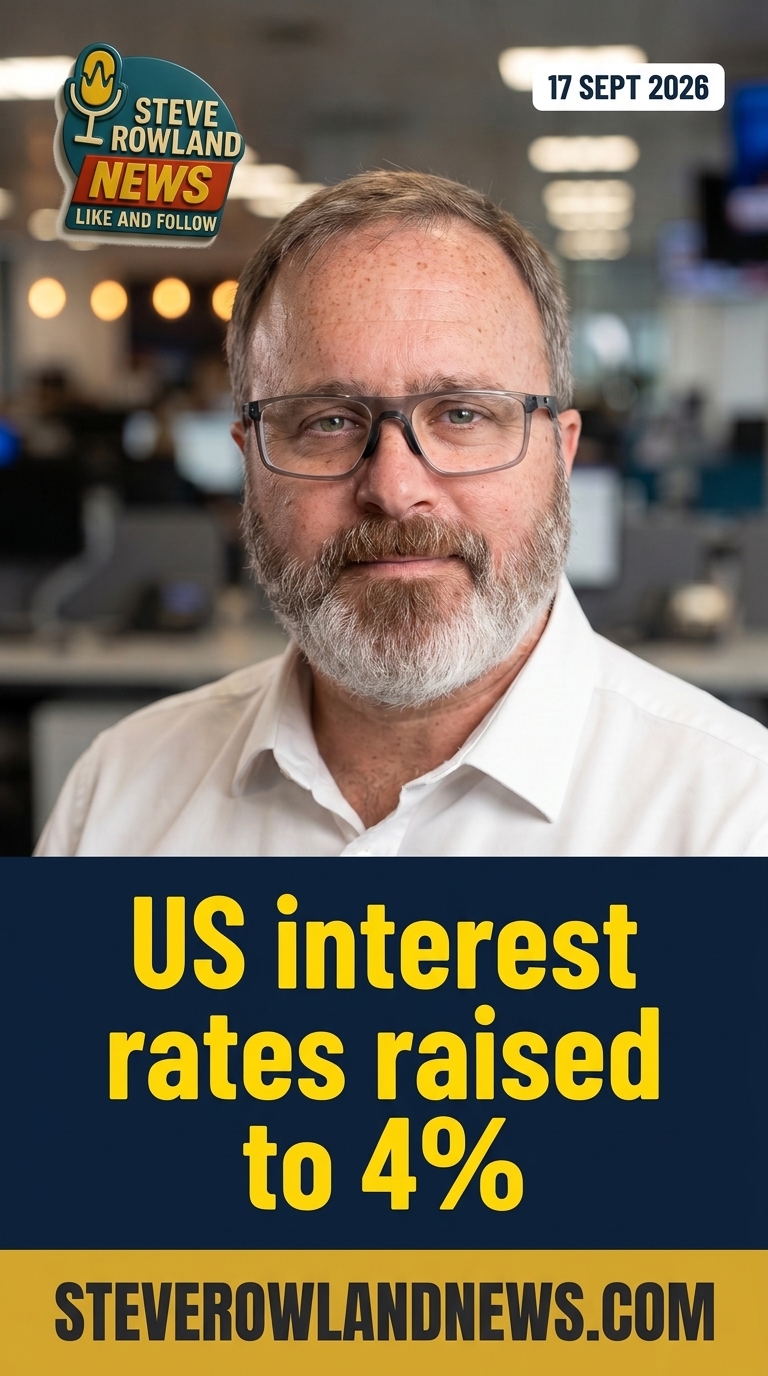
US interest rates have been increased for the first time in more than three years, as the Federal Reserve moved unanimously to tackle persistent inflation despite fierce opposition from President Donald Trump.
The central bank lifted its benchmark rate from 3.5%-3.75% to a new range of 3.75%-4%. This marks the first interest rate change of any kind since borrowing costs were reduced in December 2025, and the first rate increase since July 2023, pushing US borrowing costs to their highest level since 2007.
The unanimous decision came despite vocal calls from Donald Trump for a sharp reduction. The US president had argued that rates "should be 1%, or less, because we are the Best Credit in the World - BY FAR", before posting on social media shortly after the announcement: "LOWER THE INTEREST RATES FOR THE UNITED STATES OF AMERICA, AND FAST!"
Federal Reserve official Warsh told a press conference on Wednesday that while there was "an attitude of optimism" among the central bank's leadership, inflation remained an ongoing challenge. US inflation has now sat above the Fed's 2% target "for more than five years", heavily driven by rising fuel prices and wholesale oil costs since the outbreak of the US-Israel war with Iran.
Warsh acknowledged the practical boundaries of monetary policy, stating that the Fed "cannot affect any individual price – whether it be oil prices, whether it be food stuffs at the grocery store." He explained, however, that rate increases help prevent price rises from spreading across the broader economy, adding that a resilient jobs market allowed policymakers to stay focused on price stability.
When asked by reporters what message the rate increase sent to the White House, Warsh chuckled and said: "I have got nothing for you on a discussion with the president." The move follows earlier claims from Democratic lawmakers who suggested Warsh would act as Trump's "sock puppet", after Trump had previously criticised former Fed chair Jerome Powell for refusing to cut rates.
The political reaction on Capitol Hill was immediate. Chuck Schumer, the top Democrat in the Senate, criticised the economic fallout of the decision, stating: "This is going to make everything become more expensive," before adding, "This is because Donald Trump does not know how to manage the economy."
For consumers and borrowers, the impact has already begun to filter through. Major American lenders JP Morgan, KeyCorp, and BNY all raised their prime lending rates on Wednesday from 6.75% to 7%, a change that directly increases the interest charged on credit cards and personal loans.
Mortgage costs will also feel the pressure, though the immediate impact depends on the type of deal borrowers hold. According to Freddie Mac data, an average 30-year fixed mortgage sits at 6.76%, with 15-year deals averaging 6.09%. While existing fixed-rate homeowners will see no change to their monthly repayments, anyone seeking a new deal or looking to refinance will face higher borrowing expenses.
Looking ahead, further rate increases remain on the table. While Warsh declined to provide a personal projection, a majority of Fed policymakers expect rates to rise again before the end of this year to between 4% and 4.25%, with a small majority forecasting a peak of 4.25%-4.5% next year before potential reductions begin in 2028 and 2029.
The US is not the only economy navigating these price pressures, with the European Central Bank raising rates last week and the Bank of England scheduled to make its own decision on Thursday. I'll be following this one closely as the global picture unfolds — check back for updates.




Comments
Be the first to comment.