
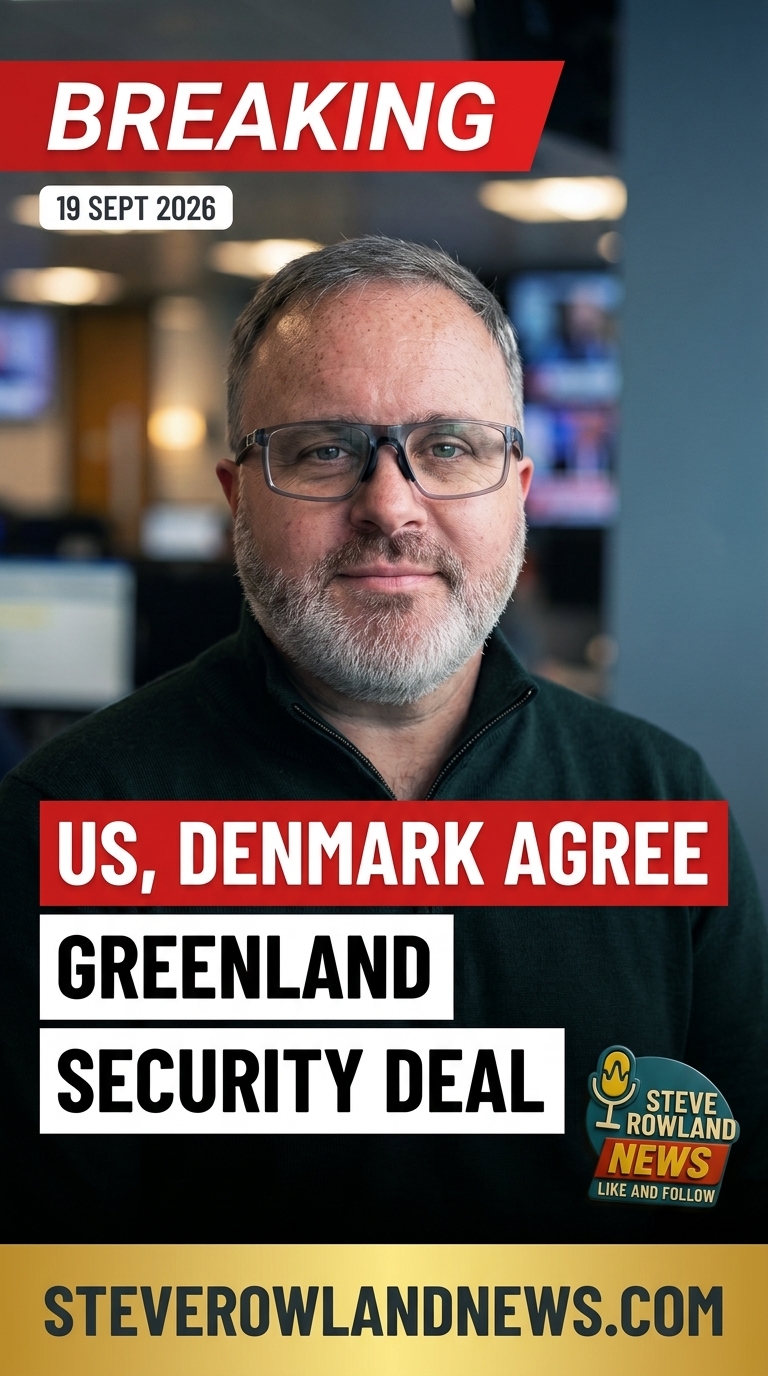
Greater Manchester Mayor Andy Burnham has hailed Donald Trump's announced security deal over Greenland, ahead of an expected first meeting with the US president, as Danish politicians and commentators continue to dismiss the pact as little more than the existing status quo.
Mr Trump announced on Friday evening that he had reached an agreement with Denmark and Greenland granting the United States "permanent control of security" over the Arctic island, resolving what he termed "all of our many US concerns". Writing on Truth Social, the president hailed the accord as a "dream come true", claiming it would operate "at no cost to the United States" and prevent foreign adversaries from maintaining military bases or making sensitive investments without "express written approval". Speaking at a White House Rose Garden dinner, Mr Trump previously emphasised Greenland's strategic position for defence against rivals including China and India, alongside an interest in the territory's mineral resources.
However, Danish observers have widely mocked the characterisation of the agreement, noting that no territory will change hands and questioning how the terms differ from a 1951 bilateral treaty that already permits indefinite US troop deployments on the island. Torsten Jansen, a US commentator for the Danish broadcaster TV2, joined other domestic analysts in questioning Mr Trump's claims, while the Danish daily Berlingske ran the headline: "Don't tell Trump that it's the Kingdom of Denmark that has won."
Henrik Dahl, a Danish Member of the European Parliament for the Liberal Alliance, said Washington had simply taken rhetorical credit for pre-existing arrangements. "A wise Danish politician once said that you can achieve almost anything if you are willing to let others take the credit," Mr Dahl said. "So let us give Donald Trump the credit for something very close to the status quo. From a Danish and Greenlandic perspective, it could hardly be much better."
The agreement follows protracted diplomatic friction after Mr Trump repeatedly refused to rule out using military force to take control of the semi-autonomous territory, which belongs to the Kingdom of Denmark. Tensions also escalated following a visit by US Vice-President JD Vance to Pituffik Space Base, where US forces have operated under the 1951 pact—a trip viewed by Copenhagen and Nuuk as a provocation.
Danish Prime Minister Mette Frederiksen and Greenland's Prime Minister Jens-Frederik Nielsen have stressed that Danish sovereignty remains intact. In a joint statement, the two leaders said the framework explicitly recognises the territorial integrity of the Kingdom of Denmark and the Greenlandic people's right to self-determination, adding that the accord "strengthens our common security".
Western allies have also expressed support. A Nato spokesperson stated the arrangement would advance regional security and stability, while French President Emmanuel Macron told the AFP news agency that international law and Danish sovereignty had been respected.
Although the full text has not yet been published, a US State Department official previously indicated that the pact grants permanent basing, access, and overflight rights, alongside unilateral authority to build military installations without requiring separate approval from Copenhagen or Nuuk. The official stated these terms would remain binding should Greenland achieve full independence in future.
The agreement is scheduled to be formally signed on the sidelines of the United Nations General Assembly in New York next week. As previously corrected, the deal must pass through parliamentary procedures in both Denmark and Greenland before it can take effect, rather than facing scrutiny solely in Copenhagen. I will continue to track the formal signing and the subsequent legislative process in both parliaments.








Comments
Comments are closed on this story.