
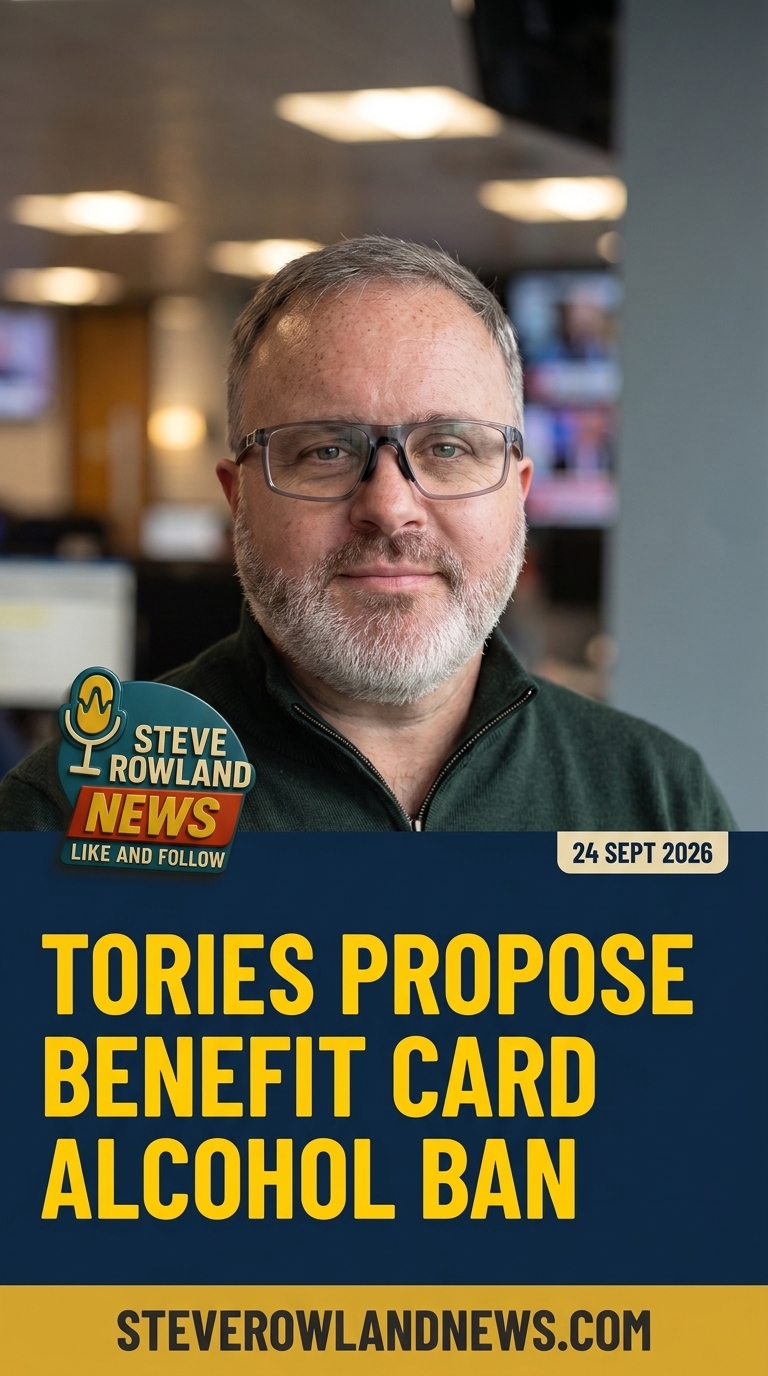
The Conservatives have set out plans to stop long-term unemployed benefit claimants from spending welfare payments on alcohol, cigarettes and gambling by introducing a restricted pre-paid card.
Under the party's proposals, people who have been out of work for more than six months would see their Universal Credit reduced by 30% if they are judged capable of work but have not previously paid enough into the system.
This lower rate, termed a "Subsistence Allowance" worth 70% of standard Universal Credit, would be loaded onto a new "Back to Work" card. The card would actively block cash withdrawals as well as purchases of alcohol, tobacco and gambling products, ensuring taxpayer money is directed solely towards essentials like food.
The plan operates on a contributory sliding scale. Anyone deemed fit to work would initially receive six months on the full rate of Universal Credit. After that, every two years a claimant has previously worked would purchase an additional year on the full rate. Under this rule, a 58-year-old who has worked since leaving school before facing redundancy would retain the full allowance until state pension age.
Claimants who are sick, disabled, or already in employment would be entirely exempt from the restrictions. The Conservatives estimate that roughly 350,000 claimants would be shifted onto the reduced rate, generating an estimated saving of £538m a year.
Defending the policy, the party argued the system needs stricter boundaries, stating: "The best welfare is a well-paid job. So, we will be tough on those who exploit the system because the current system is unfair to workers, taxpayers and those who truly need support."
Labour has firmly rejected the proposal, branding the card scheme "unworkable". A Labour Party spokesperson responded: "The Conservatives had 14 years to fix our welfare system but they completely failed to make meaningful reforms. Now they are proposing an unworkable new card scheme, which does nothing to tackle the numbers of people their system left signed off and written off."
Prime Minister Andy Burnham has also stated his intention to bring down the national welfare bill, pointing to initiatives that tackle the number of young people not in education, employment, or training, while insisting reductions should not come through "crude cuts".
Anti-poverty campaigners have raised sharp concerns over the impact on struggling households. Helen Barnard, director of policy and research at the charity Trussell, described the proposals as "deeply misguided", warning that Universal Credit already falls short of covering basic essentials.
"Universal Credit already falls well short of what people need to afford the essentials like food and heating, forcing people across the UK to the doors of food banks," Barnard said. "We see people's health being damaged and their ability to find and maintain work undermined by the severe hardship so many are facing."
The policy forms part of a wider package of proposed welfare measures from the Conservatives, which includes tightening sickness benefit criteria and scrapping Personal Independence Payment (PIP) for "low-level" mental health conditions. According to figures from the Department for Work and Pensions, total benefit spending is forecast to reach £408.6bn by 2030/31. I'll be following this one — check back for updates.






Comments
Be the first to comment.