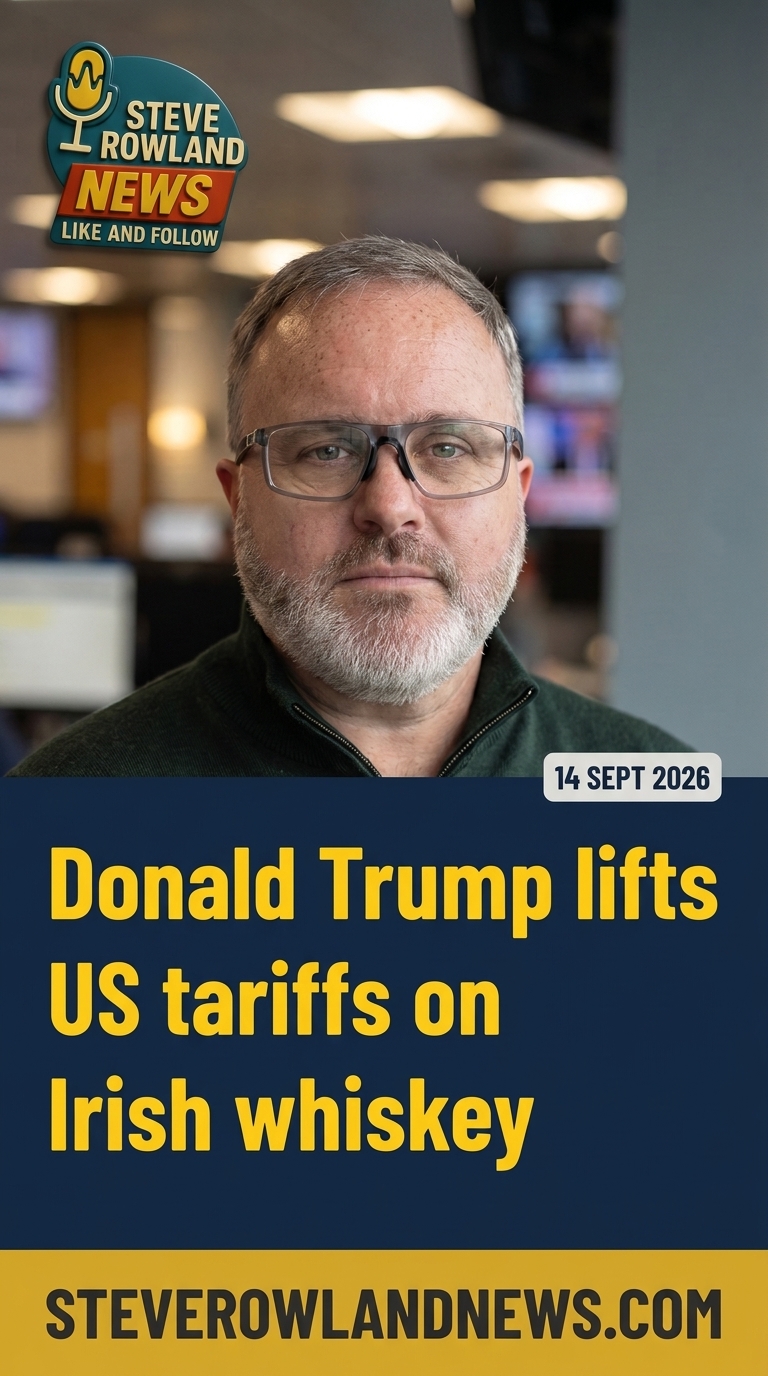
Irish distillers and government ministers have welcomed US President Donald Trump's announcement that he is abolishing tariffs on Irish whiskey, following the conclusion of his two-day visit to Ireland.
Speaking on the 18th green before presenting the Amgen Irish Open trophy to Shane Lowry at his Doonbeg golf resort in County Clare, Mr Trump said he decided to lift the levies after being lobbied by Taoiseach Micheál Martin and Lowry. Explaining his decision, Mr Trump told the crowd: "Everybody's been bugging me. They are saying would you do me a favour? It's so unfair what's going on. Could you possibly take the tariffs off of Irish whiskey and I said, on behalf of the United States of America, I am going to take the tariffs off Irish whiskey."
The Irish Whiskey Association said it "heartily welcomes" the move, adding that it will continue working with EU and US counterparts to restore a zero-for-zero arrangement across all drinks exports. Ireland's deputy premier Simon Harris described the decision as a "welcome announcement of economic significance" alongside the tourism exposure generated by the visit.
Whiskey distilled in the Republic of Ireland has faced a 10 per cent tariff as an EU export. The move follows the lifting of US tariffs on Scottish and UK whiskies earlier this year following King Charles's state visit to the US in April. That previous exemption had left Republic distillers at a competitive disadvantage, alongside several Northern Ireland producers who rely on cross-border bottling facilities in County Louth and were categorised as EU exporters.
The tariff removal came alongside escalating political fallout over Mr Trump's repeated backing for a united Ireland. Speaking in Dublin and Doonbeg, he said Irish unification was "going to happen eventually" and described joining Northern Ireland with the Republic as "one of the naturals of all time". When asked about the political backlash, Mr Trump doubled down, saying "I loved them" and claiming he had received widespread support for what he termed a "fairly routine comment". He added that he would say nothing on Scottish independence for now.
His comments have provoked strong criticism across the UK political spectrum. Former Ulster Unionist Party leader Doug Beattie said the president "doesn't know history", joining Conservative deputy leader Alex Burghart, Reform UK leader Nigel Farage and DUP leader Gavin Robinson in rejecting external interference in Northern Ireland's constitutional status. Sinn Féin leader Mary Lou McDonald, however, welcomed the intervention as "timely" and urged Dublin to prepare for unity.
Against this backdrop, Scottish National Party leader John Swinney, Plaid Cymru leader Rhun ap Iorwerth and Sinn Féin vice-president Michelle O'Neill are meeting in Cardiff in their party political roles to sign a memorandum of understanding on independence referendums. A Sinn Féin source said the discussions centre on mutual cooperation and self-determination under the Good Friday Agreement. Prime Minister Andy Burnham previously suggested a Scottish referendum could occur if a clear consensus emerged, though Downing Street has since written to Mr Swinney stating that another vote remains off limits.
I'll continue to monitor reactions from both sides of the Atlantic as well as developments from the Cardiff summit — check back for further updates.

Comments
Be the first to comment.